Under Bengaluru's Flyovers: The Human Cost of India's Infrastructure Push
Bengaluru, a symbol of India's rapid economic growth, is undergoing massive infrastructure transformation. While new flyovers and metro lines promise seamless connectivity, a ground report reveals the profound human cost – from displacement and livelihood disruption to increased social disparity – c
Bengaluru, Karnataka: Beneath the gleaming new flyovers and alongside the rapidly expanding metro lines of India's Silicon Valley, a different narrative unfolds – one of profound human disruption and the widening chasm between aspiration and reality for countless citizens. While the city surges forward as a global technology hub, its relentless infrastructure push, designed to ease urban congestion and fuel economic growth, is simultaneously uprooting lives, displacing small businesses, and testing the resilience of communities grappling with the stark realities of rapid urbanisation.
Key points
- Bengaluru's infrastructure boom, including metro expansions and road upgrades, is transforming its urban landscape at an unprecedented pace, promising enhanced connectivity and economic efficiency.
- This rapid development, however, has led to significant displacement of street vendors, small shop owners, and low-income residents, often without adequate rehabilitation or compensation.
- The soaring cost of living and property values, partly driven by infrastructure projects, is making the city increasingly unaffordable for its working-class and even lower-middle-class populations.
- Urban planners and authorities defend these projects as vital for the city's future competitiveness and to manage its explosive population growth, acknowledging but downplaying the immediate social dislocations.
- Civil society groups and affected communities are increasingly vocal, advocating for more inclusive development models, better resettlement policies, and sustainable urban planning that prioritises human well-being over sheer concrete expansion.
Bengaluru, often hailed as the engine of India's digital economy, is in the midst of an unprecedented infrastructure facelift. The city boasts over 56.1 km of operational metro lines, with an additional 118.9 km under various stages of construction, part of the colossal Namma Metro Phase-II and Phase-III projects. Complementing this are numerous flyovers, underpasses, and road-widening initiatives aimed at untangling its notoriously choked arteries. For many, particularly the burgeoning IT workforce and corporate commuters, these developments represent progress – reduced travel times, improved air quality due to lesser congestion, and a generally smoother urban experience.
“The metro has cut my commute from Whitefield to MG Road by half an hour. It’s a game-changer for professionals like us,” observes Ms. Priya Sharma, a software engineer with a multinational firm. “Of course, there’s construction dust and traffic snarls during the work, but it’s a small price to pay for a world-class city.” This sentiment is echoed by sections of the urban middle class who foresee a more efficient and modern Bengaluru.
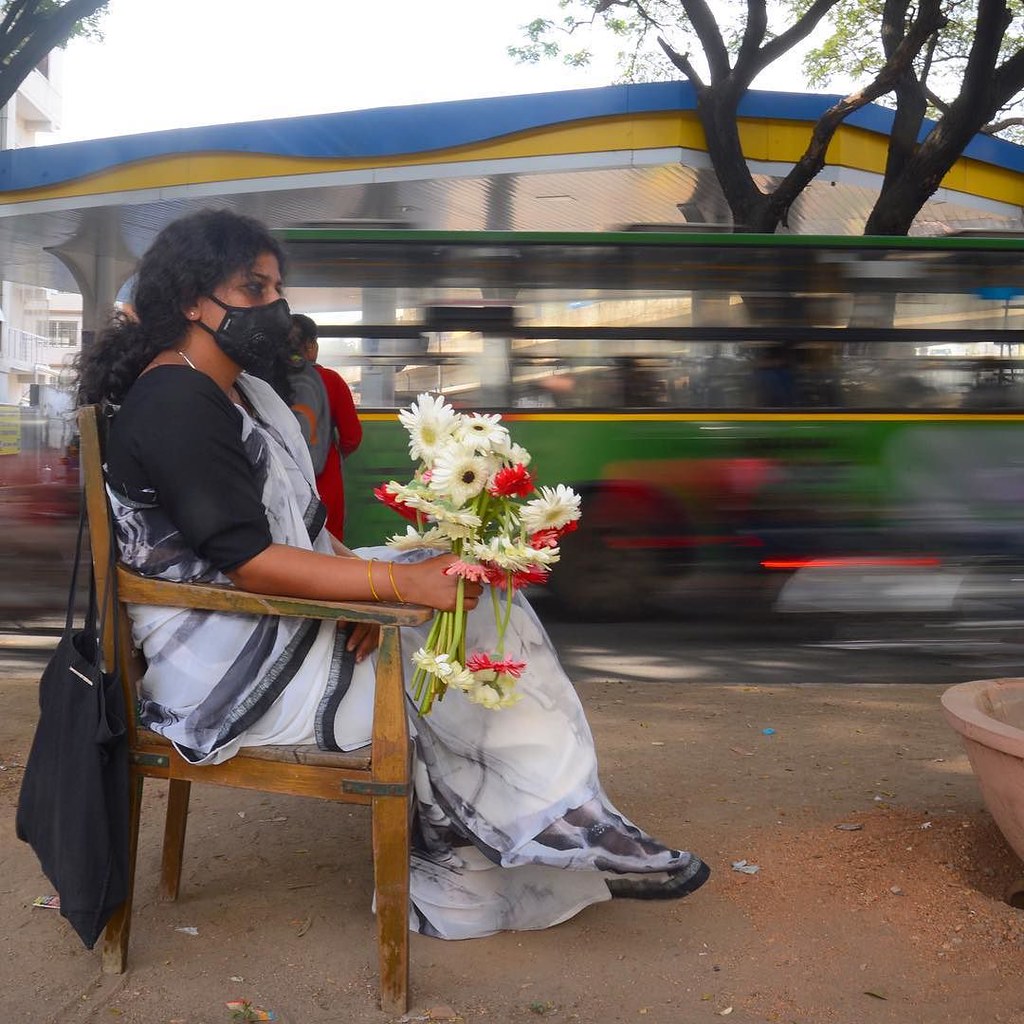
However, away from the air-conditioned confines of metro coaches and the smooth surfaces of new flyovers, a different picture emerges. In areas like KR Market, Majestic, and along the bustling Old Madras Road, the relentless march of development has left a trail of human distress. Lakshmiamma, a flower vendor who has sold marigolds and jasmine near KR Market for nearly three decades, now struggles to find a spot. “My father and grandfather sold here. This was our life,” she says, gesturing towards a newly paved walkway that leaves no room for her small basket. “With the metro construction, the customers moved, and now even the space is gone. Where do I go? How will I feed my grandchildren?”
Similar stories resonate from small shopkeepers and informal businesses. Mr. Abdul Rahim, who ran a tiny tea stall near a bus stop demolished for a flyover pillar, reflects on his lost livelihood. “They gave us a notice, a small amount that barely covered one month’s rent for a new place, and then bulldozed everything. I’ve been trying to find a new spot for months, but the rents are too high, and the municipal permits are impossible for someone like me.”
Beyond livelihoods, the very fabric of communities is being altered. The demand for land for these mega-projects often leads to the acquisition of properties in older, more affordable neighbourhoods. While official compensation might be offered, it rarely covers the true cost of relocation in a city where property values have skyrocketed. According to a recent report by the Karnataka Housing Board, the average rental prices in Bengaluru have increased by over 15% in the last year alone, placing immense pressure on low- and even middle-income families.
Dr. Ananya Sharma, Professor of Urban Economics at the Institute for Social and Economic Change (ISEC), highlights the systemic challenge. “Bengaluru’s growth model, while economically dynamic, often prioritises capital-intensive infrastructure over inclusive social planning. The urban poor and informal sector workers, who form the backbone of the city’s service economy, are disproportionately affected. We are creating islands of prosperity surrounded by seas of displacement and deepening inequality.”
Official data from the Bengaluru Metro Rail Corporation Limited (BMRCL) indicates that over 1,500 properties, both commercial and residential, have been acquired for Phase II of the Namma Metro project alone. While compensation packages are legally mandated, critics argue they rarely account for loss of community networks, access to affordable amenities, or the true cost of rebuilding a life.
Background
Bengaluru's transformation from a tranquil 'Garden City' to India’s 'Silicon Valley' began in earnest in the 1990s with the IT boom. This explosion in population and economic activity quickly outstripped its existing infrastructure, leading to severe congestion and strain on public services. Recognising this, successive state governments embarked on ambitious infrastructure plans, notably the initiation of the Namma Metro project in 2005, followed by multiple phases of elevated roads and signal-free corridors. The vision was to position Bengaluru as a global metropolis, a competitive hub for technology and innovation, capable of supporting a projected population of over 15 million by 2030. Policies like the Karnataka Town and Country Planning Act and the Right to Fair Compensation and Transparency in Land Acquisition, Rehabilitation and Resettlement Act, 2013 (LARR Act) govern land acquisition, though their implementation remains a point of contention among affected communities and activists.
What it means
The developments in Bengaluru serve as a potent microcosm of India's broader urbanisation challenge. As cities across the nation grapple with explosive growth, the model of development – prioritising large-scale infrastructure projects – invariably leads to a paradox of progress. While these projects are critical for economic vitality and managing urban sprawl, they frequently come at the expense of social equity and environmental sustainability. The widening gap between the beneficiaries of economic growth and those displaced or marginalised highlights the urgent need for a more humane, inclusive, and integrated approach to urban planning across India, one that moves beyond mere concrete and steel to address the fundamental needs of all citizens.
Reactions
The public reaction to Bengaluru's infrastructure drive is notably mixed. Many residents, particularly those who commute long distances, welcome the promise of reduced traffic and improved connectivity. “It’s about time Bengaluru got infrastructure worthy of a global city,” says Mr. Govindappa, a retired government employee who now uses the metro for his daily errands. However, a significant segment, including affected communities, environmental activists, and urban planners, voices strong concerns. Groups like 'Hasiru Usiru' (Green Breath) have actively protested the extensive tree felling for road widening, while several NGOs advocate for better rehabilitation policies for displaced vendors and slum dwellers. Political responses often defend the projects as essential for economic growth, with promises of adequate compensation and rehabilitation, though these promises are frequently criticised for their inadequacy and delayed implementation. The current civic administration, while acknowledging the challenges, maintains that the long-term benefits outweigh the short-term disruptions.
What happens next
Bengaluru’s infrastructure expansion is far from over. With several metro phases still under construction and plans for new peripheral ring roads and elevated corridors, the city is set to continue its transformation for at least another decade. The crucial question remains whether future projects will learn from past experiences. Experts advocate for a shift towards a more people-centric approach, emphasising robust social impact assessments, transparent rehabilitation frameworks, and active community participation in planning. There is a growing call for Transit-Oriented Development (TOD) policies to be implemented not just for real estate development, but also to create equitable access to affordable housing and livelihoods near transit hubs. The balance between rapid economic growth, environmental preservation, and social justice will define Bengaluru’s trajectory and offer vital lessons for urban development across India's burgeoning metropolises.
Source: Toofan Express News