Overview
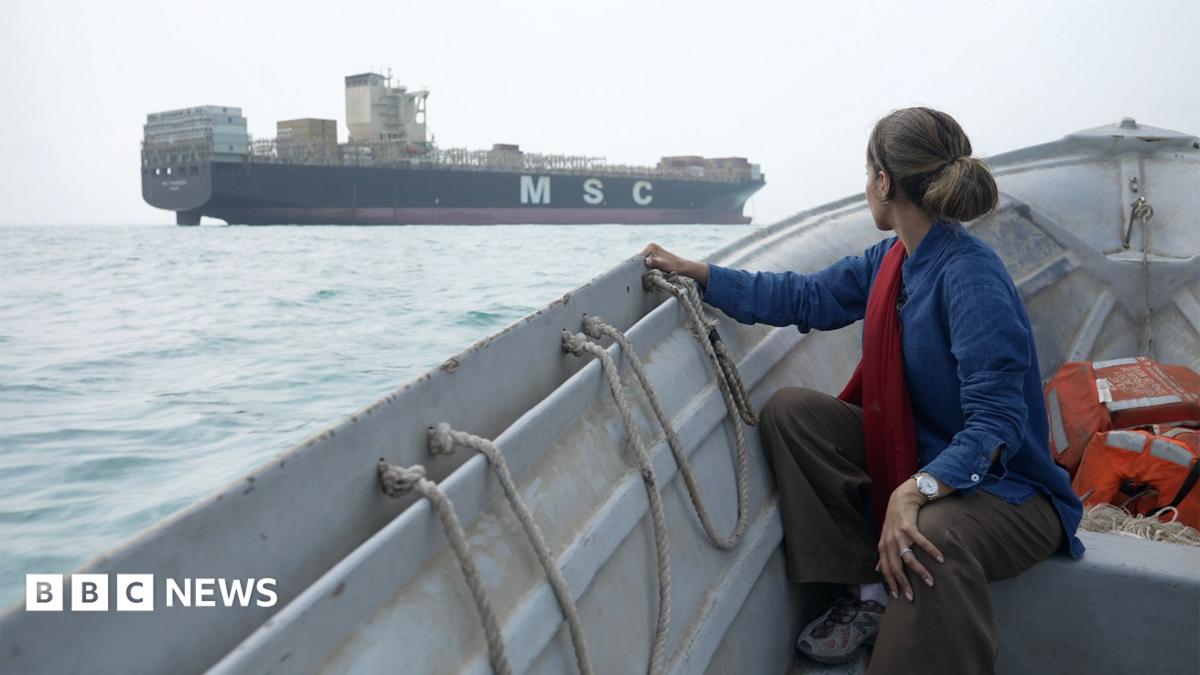
The Strait of Hormuz, a critical waterway connecting the Persian Gulf to the Gulf of Oman, has witnessed an uneasy calm return to its shores. A recent visit by the BBC to the port city of Bandar Abbas in Iran revealed the impact of the US-Israeli war with Iran on everyday life. The city, once a bustling hub of maritime activity, now wears a deserted look, with seized ships and shark fishermen being a common sight.
According to Iranian officials, the war has resulted in significant economic losses for the country, with trade and commerce being severely affected. The seizure of ships by Iranian authorities has further exacerbated the situation, leading to a decline in maritime traffic. Dr. Ali Vaez, a senior analyst at the International Crisis Group, noted that the situation in the Strait of Hormuz is a complex one, with multiple players involved. He stated, 'The US-Israeli war with Iran has created a volatile situation in the region, with the Strait of Hormuz being a critical flashpoint. The seizure of ships and the presence of shark fishermen are just a few examples of the many challenges facing the region.'
The return of an uneasy calm to the Strait of Hormuz is a welcome development, but experts warn that the situation remains fragile. Rear Admiral Shahram Irani, a former Iranian naval officer, observed that the region is still vulnerable to external threats. He said, 'The Strait of Hormuz is a sensitive area, and any miscalculation could lead to a wider conflict. It is essential for all parties involved to exercise restraint and work towards a peaceful resolution of the crisis.'
Background
The US-Israeli war with Iran has its roots in a long-standing dispute over Iran's nuclear program. The conflict escalated in recent months, with both sides engaging in a series of attacks and counter-attacks. The situation in the Strait of Hormuz is a critical aspect of the conflict, with the waterway being a vital conduit for international trade.
Iran has long been accused of attempting to disrupt maritime traffic in the Strait of Hormuz, with the US and its allies responding with a series of military deployments to the region. The seizure of ships by Iranian authorities has been a major point of contention, with the US and its allies viewing it as an act of aggression. Dr. Sanam Vakil, a Middle East expert at Chatham House, noted that the situation in the Strait of Hormuz is a symptom of a larger problem. She stated, 'The conflict between the US and Iran is a complex one, with multiple factors at play. The situation in the Strait of Hormuz is just one aspect of a broader crisis that requires a comprehensive solution.'
The city of Bandar Abbas, once a thriving commercial center, has been severely affected by the conflict. The port city is home to a significant number of shipyards and maritime facilities, which have been forced to shut down due to the lack of activity. Local residents are struggling to make ends meet, with many relying on alternative sources of income to survive. Mayor of Bandar Abbas, Mr. Abbas Amini, observed that the city is facing significant economic challenges. He said, 'The conflict has had a devastating impact on our city, with many businesses forced to shut down. We are working hard to support our residents and find ways to revive the local economy.'
Key Developments
The seizure of ships by Iranian authorities has been a major development in the conflict. The ships, which include oil tankers and cargo vessels, have been seized for allegedly violating Iranian territorial waters. The US and its allies have condemned the seizures, viewing them as an act of aggression. Rear Admiral John Richardson, a former US Chief of Naval Operations, noted that the seizures are a significant concern. He stated, 'The seizure of ships by Iranian authorities is a serious issue, and one that requires a firm response from the international community. We must work together to ensure the safety and security of maritime traffic in the region.'
The presence of shark fishermen in the Strait of Hormuz has also been a notable development. The fishermen, who are largely from local communities, have been forced to venture further out to sea in search of fish due to the decline of fish stocks in the region. The fishermen have been accused of being used as proxies by Iranian authorities to disrupt maritime traffic. Dr. Hussein Bagherzadeh, a marine biologist at the University of Tehran, observed that the presence of shark fishermen is a symptom of a larger environmental problem. He said, 'The decline of fish stocks in the region is a significant concern, and one that requires a comprehensive solution. We must work to protect the marine ecosystem and support the livelihoods of local communities.'
The return of an uneasy calm to the Strait of Hormuz has been welcomed by the international community. The US and its allies have called for restraint and a peaceful resolution to the conflict. Iranian authorities have also expressed a willingness to engage in dialogue, although the conditions for such talks remain unclear. Ms. Emma Taylor, a conflict resolution expert at the University of Oxford, noted that the return of calm is a positive development. She stated, 'The return of calm to the Strait of Hormuz is a welcome development, but it is essential that all parties work towards a lasting solution to the conflict. This will require compromise and a willingness to engage in meaningful dialogue.'
Expert Analysis
Experts warn that the situation in the Strait of Hormuz remains fragile, with the potential for further escalation. The conflict between the US and Iran is a complex one, with multiple factors at play. Dr. Ankit Panda, a senior editor at The Diplomat, noted that the situation is a classic example of a security dilemma. He stated, 'The conflict between the US and Iran is a classic example of a security dilemma, where one side's efforts to increase its security are perceived as a threat by the other side. This creates a vicious cycle of escalation, which can be difficult to break.'
The role of external actors, such as the US and its allies, is also a critical factor in the conflict. The US has a significant military presence in the region, with a number of bases and personnel deployed to support local allies. Dr. Dina Esfandiary, a senior advisor at the International Crisis Group, observed that the US role in the conflict is a complex one. She said, 'The US has a significant role to play in the conflict, but it must be careful not to exacerbate the situation. The US must work with its allies to find a peaceful solution to the crisis, one that takes into account the concerns of all parties involved.'
The economic implications of the conflict are also significant. The Strait of Hormuz is a critical waterway for international trade, with a significant proportion of the world's oil passing through it. The conflict has resulted in significant economic losses, with trade and commerce being severely affected. Mr. Robin Mills, a senior economist at Qamar Energy, noted that the economic implications of the conflict are far-reaching. He stated, 'The conflict in the Strait of Hormuz has significant economic implications, with the potential to disrupt global trade and commerce. The international community must work together to find a peaceful solution to the crisis, one that takes into account the economic interests of all parties involved.'
Impact & Implications
The impact of the conflict on the local community has been significant. The city of Bandar Abbas, once a thriving commercial center, has been severely affected by the conflict. The port city is home to a significant number of shipyards and maritime facilities, which have been forced to shut down due to the lack of activity. Local residents are struggling to make ends meet, with many relying on alternative sources of income to survive.
The conflict has also had a significant impact on the environment. The decline of fish stocks in the region is a significant concern, with the potential to have long-term consequences for the marine ecosystem. The presence of shark fishermen in the Strait of Hormuz has also been accused of disrupting maritime traffic, with the potential to exacerbate the conflict. Dr. Maria Snell, a marine conservation expert at the World Wildlife Fund, noted that the environmental implications of the conflict are significant. She stated, 'The conflict in the Strait of Hormuz has significant environmental implications, with the potential to disrupt the marine ecosystem and impact the livelihoods of local communities. We must work to protect the environment and support the conservation of marine life in the region.'
The international community has a critical role to play in resolving the conflict. The US and its allies must work with Iranian authorities to find a peaceful solution to the crisis, one that takes into account the concerns of all parties involved. The United Nations has also called for restraint and a peaceful resolution to the conflict, with the potential to play a mediating role in negotiations. Ms. Mona Juul, a UN diplomat, observed that the international community must work together to resolve the conflict. She said, 'The international community must work together to resolve the conflict in the Strait of Hormuz. This will require a collective effort, with all parties working towards a peaceful solution that takes into account the concerns of all parties involved.'
What Happens Next
The future of the conflict in the Strait of Hormuz remains uncertain. The return of an uneasy calm to the region is a welcome development, but experts warn that the situation remains fragile. The US and Iran must work towards a peaceful resolution to the conflict, one that takes into account the concerns of all parties involved.
The role of external actors, such as the US and its allies, will be critical in resolving the conflict. The US must work with its allies to find a peaceful solution to the crisis, one that takes into account the concerns of all parties involved. The United Nations has also called for restraint and a peaceful resolution to the conflict, with the potential to play a mediating role in negotiations. Dr. Karim Sadjadpour, a senior fellow at the Carnegie Endowment for International Peace, noted that the US has a critical role to play in resolving the conflict. He stated, 'The US has a critical role to play in resolving the conflict in the Strait of Hormuz. The US must work with its allies to find a peaceful solution to the crisis, one that takes into account the concerns of all parties involved.'
The conflict in the Strait of Hormuz is a complex one, with multiple factors at play. The situation remains fragile, with the potential for further escalation. However, the return of an uneasy calm to the region is a welcome development, and one that provides a window of opportunity for a peaceful resolution to the conflict. As the international community works towards a solution, it is essential that all parties involved exercise restraint and work towards a lasting peace.
Source: Reporting based on information from www.bbc.co.uk.